Habits & Nutrition
Foods for Cellulite, Water, and Habits for Firmer-Looking Skin
By CelluFix
· 7 min read
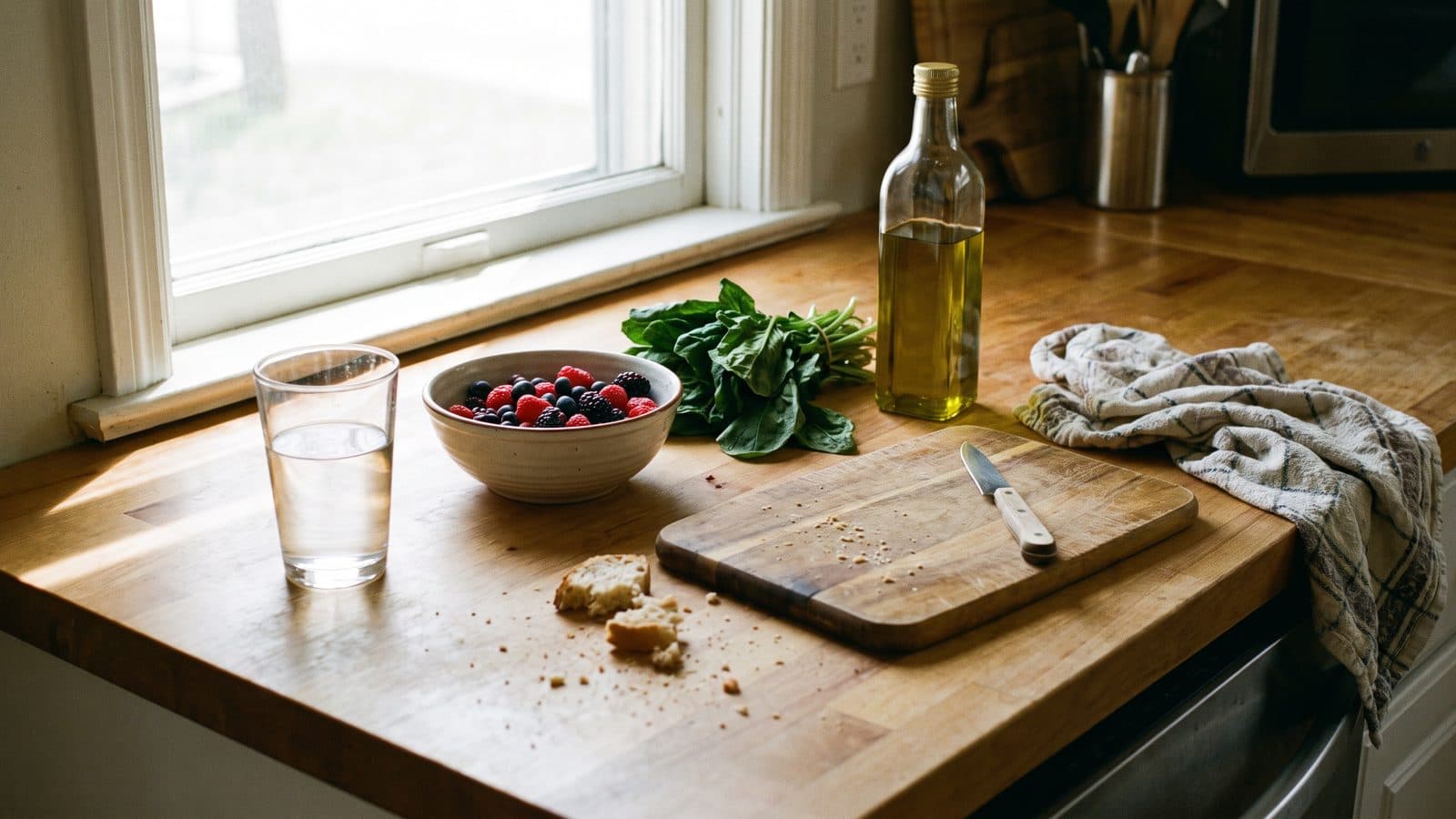
The best foods for cellulite are not a special or exotic menu. No single food, drink or supplement changes what cellulite is beneath the skin. But a few everyday eating and hydration habits genuinely support how firm and healthy your skin looks: the same protein, plants, good fats and water that support skin, muscle and circulation. Water helps skin look its best, though it does not work on its own. That is the honest version.
First, what eating can and cannot do
Cellulite is structural. It is the pattern you see when fat sits between bands of connective tissue and presses up against the skin. No plate of food rearranges that architecture, and you should be sceptical of anyone who says a "diet for cellulite" will. If you want the full picture of why it forms, we cover it in what cellulite actually is.
What food can do is support everything sitting above and around that structure: the muscle that gives your legs shape, the collagen in your skin, your circulation and your hydration. That support is real, if modest. And unlike a cream, better eating pays you back well beyond how your skin looks.
Food supports the skin you have. It does not redesign the tissue underneath it. Both things can be true at once.
Foods for cellulite: the skin-supportive picks worth knowing
Rather than a restrictive list of what to cut out, it is more useful to think about what to add. A few categories do genuine work for skin and the muscle beneath it:
- Protein builds the muscle under your skin and supplies the blocks your body uses to make collagen. Think eggs, fish, poultry, beans, lentils, Greek yoghurt and tofu.
- Vitamin C foods matter because your body needs vitamin C to form collagen, part of what keeps skin looking firm. Peppers, citrus, kiwi, strawberries and broccoli are easy sources.
- Good fats from oily fish, olive oil, nuts and avocado support the skin barrier and help skin stay supple.
- Colourful plants and fibre from a wide range of vegetables and fruit bring antioxidants that back up overall skin health and steady energy.
- Water-rich foods like cucumber, tomatoes, oranges and leafy greens top up your daily hydration without you thinking about it.
None of these is a magic ingredient. They earn their place because, together and repeated over weeks, they support firmer-looking skin and stronger legs. That is exactly the ground a movement habit builds on.
Does drinking water help cellulite?
This is one of the most-searched questions on the topic, so it deserves a straight answer. Well-hydrated skin looks and feels fuller and healthier; skin that is short on water can look duller and a little slack. So staying hydrated genuinely supports how your skin looks.
What water does not do is dissolve or drain the connective-tissue pattern beneath the surface. That is a myth worth retiring. There is also no evidence that forcing down large amounts beyond your thirst does anything extra. Drink to comfortable, regular hydration across the day, let your urine colour be a rough guide, and treat it as a baseline habit rather than the whole plan.
How the common "cellulite diet" claims compare
The internet is full of eating rules aimed at cellulite. Here is how the usual claims hold up against an honest reading of the evidence:
| Claim you will see | What is actually true | Honest expectation |
|---|---|---|
| "This detox flushes out cellulite" | Your liver and kidneys already handle detoxification; no juice or tea drains connective tissue | Skip the spend; results are a marketing story, not a real change |
| "Cut all salt and the look goes" | Very high sodium can cause temporary puffiness, but it does not create or resolve the structure | Reasonable salt intake is sensible for health; it is not a targeted lever |
| "Collagen supplements firm the skin" | Evidence is mixed and early; whole-food protein plus vitamin C is a cheaper, well-understood route | May be a minor support at best; not a stand-alone answer, and results vary |
| "Drinking more water clears it" | Hydration supports how skin looks but does not reach the tissue below | A useful baseline habit, not a cure |
| "Eat enough protein and move regularly" | Supports muscle tone, collagen formation and circulation over time | The most reliable, honest lever, though gradual and individual |
The dramatic promises in that table fall apart on inspection; the boring, sustainable habits at the bottom are the ones that actually support the look.
Circulation habits that support the look
Eating well works best next to a few small circulation-friendly habits. Sluggish circulation is often blamed for how skin looks, and while the science there is modest, these habits are low-cost, low-risk and good for you regardless:
- Move often. Regular walking and strength work keep blood moving through your legs and build the muscle that gives them shape.
- Break up long sitting. Stand, stretch or take a short walk every hour or so.
- Elevate and stretch. Putting your legs up at the end of the day can help you feel less heavy-legged.
- Sleep enough. Recovery is when muscle and skin do their repair work.
- Be patient. Skin and muscle change slowly, and being honest about the pace is part of the point.
For where topical products fit into all this, we take an evidence-first look at whether cellulite creams work. The short version: food and movement do far more than anything you rub on.
Where CelluFix fits
There is an honest catch with nutrition and hydration alone: they support your skin, but they do not build the muscle tone that most reliably supports firmer-looking legs. That is the piece a structured movement habit adds, and it is exactly what CelluFix is built around. Rather than a diet plan or another cream, CelluFix is a guided 16-week movement and habit program designed to support the appearance of cellulite through consistency, not promises. It pairs naturally with the eating habits above: protein and water support the work, and the movement does the shaping. If you want to see what a realistic plan for your body and schedule looks like, you can take the 2-minute quiz. Results vary, and we say so up front. There is more on that thinking in why CelluFix is a program, not a cream.
A simple weekly rhythm
You do not need to overhaul your kitchen. A sustainable pattern tends to look like this:
- Build most meals around a protein source and a couple of colourful vegetables
- Add a vitamin C food most days for collagen support
- Include good fats, like a little olive oil, some nuts, or oily fish a couple of times a week
- Keep water within easy reach and sip through the day
- Move your legs daily and add short strength sessions you can actually repeat
- Protect your sleep
Repeat it, forgive the off days, and let time do its quiet work.
The honest takeaway
There is no secret food, drink or diet for cellulite, and any headline that promises one is selling a story. What is true is quieter and more durable: enough protein, plenty of plants, good fats, sensible hydration and daily movement support firmer-looking skin, stronger legs and better overall health. Water helps skin look its best but does not work on its own. Eat to support the body you have, move to shape it, and judge any program, ours included, by how honest it is about the pace. Results vary, and the habits are worth it either way.
Reference
Luebberding S, Krueger N, Sadick NS. Cellulite: an evidence-based review. American Journal of Clinical Dermatology, 2015;16(4):243–256.
Common questions
What foods help reduce cellulite?
No food will reduce cellulite on its own, and honest sources will not claim one does. What eating well can do is support the skin and muscle above the structure: protein for muscle and collagen, vitamin C for collagen formation, and good fats, fibre and water for overall skin health. Paired with regular movement, those foods support firmer-looking skin over time. Think support for the appearance, not a cure, and results vary.
Are there foods for cellulite that change how it looks?
No single food changes the structure under your skin. What eating well can do is support the skin and tissue that sit above it: protein for muscle and collagen, vitamin C for collagen formation, and good fats and fibre for overall skin health. Think of it as support for the look, not a cure, and results vary.
Does drinking water help cellulite?
Staying well hydrated helps skin look and feel its best, and dehydrated skin can look duller and less full. But water alone does not remove the connective-tissue pattern beneath the surface. It is a sensible baseline habit, not a stand-alone answer.
Is there a diet for cellulite that actually works?
There is no special diet that targets cellulite specifically, and honest sources will not promise one. A balanced way of eating (enough protein, plenty of plants, good fats and water) supports firmer-looking skin over time alongside movement. It is a supporting habit, not a stand-alone result.
Keep reading
Take the 2-minute quiz and get a personalized daily plan for the appearance of cellulite.
Take the quiz